In this blog, I attempt to discuss how social innovation and social media innovation promotes positive environmental outcomes. Social innovation is a kind of new social practice that aims to generative innovative ideas and solutions to solve social needs and problems in the current world (European Commission, 2014). Normally, social innovation involves a diverse range of initiatives and activities that are undertaken with the purpose of creating social benefits. At present, social innovation has been widely considered as a powerful and useful tool in environmental sector because it would help to address all kinds of serious environmental and social problems so as to promote the achievement of sustainable development (Piccarozzi, 2017). Based on this perspective, I personally considered that social innovation is good for both environment and society. To deepen the insights about the positive implications of social innovation, it is interesting to explore the relationship between social innovation and environmental outcome.
I consider social innovation could also promote innovative products or service to promote positive environmental outcome so as to achieve the sustainable development. For example, water pollution and scarcity has become a key environmental and social problem. According to statistics, 40% of population around the world is suffering from water scarcity, and 785 million people still cannot access to the safe drinking water and basic sanitation service (United Nations, 2019). More seriously, around 701 million people still engaged in the behaviour of open defecation (United Nations, 2019). Each year, about 289,000 children under 5 years old die from diarrheal diseases caused by poor water and sanitation. To address such social or environmental problem, various social innovation initiatives are undertaken. “Who Gives A Crap” is a typical social innovation solution initiated by Simon, Jehan and Danny in July 2012. Such social innovation initiative aims to provide opportunity for people to access toilets and to provide toilet papers that are made with environmentally friendly materials for reducing environmental problems such as environmental destruction and water pollution, and donates its profits to non-profit organizations that are committed to improve the access of people hygiene, water and basic sanitation. Through social innovation initiative, more and more people are able to access clean and safe drinking water and the basic sanitation. In my personal view, such social innovation initiative would helps help to advance the overall agenda of wastewater treatment and recycling at local, national and global level. For example, the social innovation initiative “Who Gives A Crap” helps to earn profits by selling toilet paper with environmentally friendly materials. The earned profit can be donated to non-profit organizations working to improve wastewater treatment in developing countries. To a large extent, such social innovation initiative could make positive contributions to address the problem of wastewater and to promote the wide access to safe drinking water and the basic sanitation. Based on this perspective, such social innovation initiative helps to promote the achievement of the sustainable development goal 6. Hence, I have found that social innovation is an effective approach to promote positive environmental outcomes and to achieve expected sustainable development goals.
Positive environmental outcome can also be achieved through social media campaigns. For example, Billion Acts of Green Campaign is an innovative social media campaign that aims to promote positive environmental outcomes (World.edu, 2010). Such social media campaign was launched by Earth Day Network for the 2010’s Earth Day and aimed to encourage people to take actions for reducing environmental footprint (World.edu, 2010). The Billion Acts of Green campaign featured social media tools that make people to particulate in the campaigns easily. Such campaign encourage the users of social media platform such as Facebook and Twitter to pledge one “action of green” and in the meantime share the action through their social media networks (World.edu, 2010). Such social media campaign greatly increased the environmental commitments of social media users and encouraged them to make their efforts to reduce environmental footprint. By now, 2,688,209,868 acts of green are reached due to the implementation of the Billion Acts of Green Campaign (Earth Day Network, 2019). Based on this case, it is found that clever and innovative social media campaign helps to promote positive environmental outcomes.
Based on the discussions above, I personally believe that social innovation and innovative social media campaign has positive relationship with better environmental outcomes because it helps to address various social and environmental problems effectively so as to realize sustainable development goals developed by the United Nations Development Programmed. Due to the positive benefits of social innovation and innovative social media campaign, I personally consider that national government should focus on encouraging and support social enterprises and individuals to engage in various social innovation and social media campaign in order to achieve better environmental outcome and to realize the goal of sustainable development goals.
References
European Commission (2014).Social Innovation and the Environment.[Online] Available from: https://ec.europa.eu/environment/integration/research/newsalert/pdf/IR10_en.pdf [Accessed: 9 September2019].
Earth Day Network (2019). Take action: A Billion Acts of Green, [Online] Available from: https://www.earthday.org/take-action/ [Accessed: 12September2019].
Piccarozzi, M. (2017). Does Social Innovation Contribute to Sustainability? The Case of Italian Innovative Start-Ups, Sustainability, 9, pp. 1-28.
United Nations (2019). Sustainable Development Goals6 [Online] Available from: https://sustainabledevelopment.un.org/sdg6 [Accessed: 10 September2019].
World.edu (2010).Social media week: Top 3 environmental social media campaigns. [Online] Available from: https://world.edu/social-media-week-top-3-environmental-social-media-campaigns/ [Accessed: 12September2019].

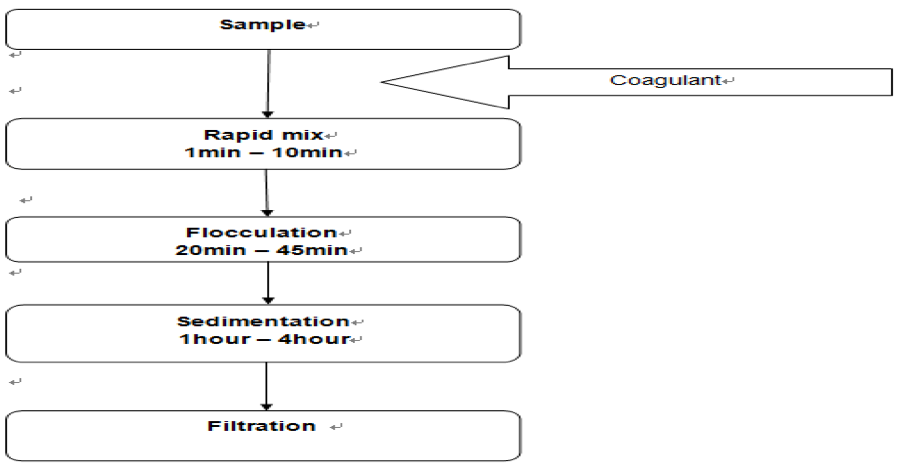
 urban wastewater treatment